

Architectural Precast Composites & Façade Systems in Saudi Arabia
STATION is a leading provider of Architectural Precast Façade Systems in Saudi Arabia, serving Riyadh, Jeddah, Dammam, NEOM, Red Sea Islands and major cities across the Kingdom. We specialize in the design, manufacturing, and installation of high-quality GFRC cladding systems for commercial, mixed-use, and large-scale developments.
Our exterior façade products are available in a wide range of architectural styles, textures, finishes, and color shades, helping architects and developers achieve distinctive, modern building designs. Each solution is engineered to deliver durability, visual impact, and long-term performance in Saudi Arabia’s demanding climate.
All STATION operations strictly comply with international construction and manufacturing standards, ensuring consistency, safety, and superior quality. Our commitment to excellence has made us a trusted composite and façade partner for landmark projects throughout the Kingdom.
We manufacture advanced composite exterior systems using UHPC, precast concrete, GFRC, and fiberglass-based materials, designed to withstand extreme heat, sand, humidity, and harsh weather conditions. These materials provide exceptional strength and reliability for year-round outdoor applications across Saudi Arabia.
By working closely with local developers, architects, and contractors, STATION delivers cost-effective, customized composite façade solutions that seamlessly integrate quality, performance, and architectural aesthetics, ensuring successful project delivery and client satisfaction.
Composite Materials We Use
We specialize in advanced composite materials designed for architectural, structural, and decorative applications. Each material offers unique advantages in strength, weight, durability, and design flexibility.
Glass Fiber Reinforced Concrete (GRC)
What Is GRC?
Glass Fiber Reinforced Concrete (GRC) is a high-performance composite material made from Portland cement, fine aggregates, water, alkali-resistant glass fibers, and specialized additives. When manufactured under controlled conditions using precise mix proportions, GRC delivers exceptional strength while remaining significantly lighter than traditional concrete.
A typical GRC mix includes:
-
Portland cement and fine sand
-
Approximately 5% glass fiber by weight
-
Water-to-cement ratio of about 0.33
-
5% acrylic co-polymer additive by volume
This combination results in outstanding flexural, tensile, and impact strength, provided the material is properly mixed, sprayed, compacted, and cured.
Advantages of GRC
-
Lightweight: 70–90% lighter than solid concrete
-
High Strength: Excellent flexural and tensile performance
-
Durable: Resistant to weathering, corrosion, and extreme temperatures
-
Disaster Resistant: Proven performance against hurricanes, floods, fires, and earthquakes
-
Eco-Friendly: Reduced material usage and lower transportation impact
-
Aesthetic Flexibility: Unlimited shapes, textures, and colors
Applications
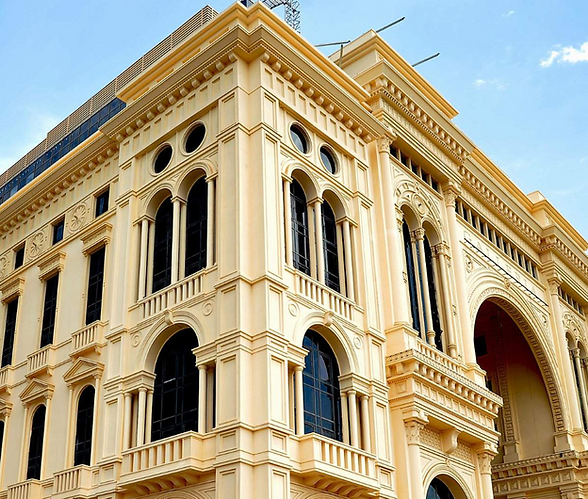
GRC is most commonly used for exterior cladding, façades, decorative panels, and architectural restoration. Its lightweight nature reduces structural loads, speeds up installation, and lowers overall construction costs—while offering unmatched design freedom.

Glass Reinforced Plastic (GRP / FRP / Fiberglass)
What Is GRP?
Glass Reinforced Plastic (GRP), also known as Fiberglass or FRP (Fiber Reinforced Plastic), is one of the world’s most versatile composite materials. Its architectural potential was famously revealed in 1967 during the attempted demolition of Disneyland’s House of the Future, which proved nearly indestructible.
Since then, GRP has become widely adopted across construction, transportation, marine, and aerospace industries.
Why Choose GRP?
-
Extremely Strong: Up to seven times the flexural strength of steel
-
Lightweight: High strength-to-weight ratio reduces structural and shipping costs
-
Seamless Construction: Sections can be bonded to form watertight assemblies
-
Highly Moldable: Ideal for complex shapes, textures, and intricate details
-
Low Maintenance: Will not rust, corrode, or require cathodic protection
-
Disaster Resistant: Performs exceptionally well in extreme weather conditions
-
Superior Aesthetics: Can replicate bronze, wood, stone, iron, and more
Applications
GRP is widely used for:
-
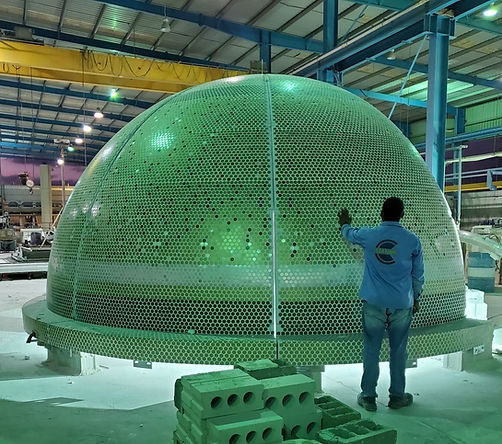
Architectural domes, vaults, minarets, and decorative cladding
-
Parking structures and façades
-
Boat hulls, automotive components, and aircraft parts

Glass Fiber Reinforced Gypsum (GRG / GFRG)
What Is GRG?
Glass Fiber Reinforced Gypsum (GRG) is a lightweight, high-strength interior building material that serves as a modern alternative to traditional plasterwork. It is composed of ultra-fine alpha gypsum, Portland cement, sand, and glass fiber reinforcement.
GRG is pre-molded, cost-effective, and capable of producing highly detailed architectural elements with consistent quality.
Note: GRG is intended for interior use only and is not suitable for exterior environments.
Benefits of GRG
-
Lightweight & Strong: Requires little to no additional structural support
-
Cost-Effective: Lower cost than traditional plaster or carved materials
-
Fire Resistant: 100% non-combustible and flame resistant
-
Smooth Finish: Ideal base for paint and decorative coatings
-
Crack & Shrink Resistant: Long-lasting and dimensionally stable
-
Fast Installation: Prefabricated components reduce on-site labor
Applications
GRG is commonly used for:
-
Domes and ceilings
-
Columns and cornices
-
Moldings and decorative interior features


Ultra-High Performance Concrete (UHPC)
What Is UHPC?
Ultra-High Performance Concrete (UHPC), also known as Reactive Powder Concrete (RPC), represents the latest advancement in concrete technology. It is an advanced composite material designed to overcome the limitations of conventional concrete.
Typical UHPC compositions include:
-
Portland cement
-
Fine sand and silica fume
-
High-range water-reducing admixtures (HRWR)
-
Fibers (usually steel)
-
Minimal water content
UHPC often eliminates the need for traditional steel reinforcement and can be virtually self-placing.
Advantages of UHPC
-
Ultra-High Strength:
-
Compressive strength up to 180 MPa
-
2–3× stronger than conventional concrete
-
Flexural strength 2–6× higher
-
-
Thinner, Lighter Sections: Reduced dead load and material use
-
Exceptional Surface Quality: Nearly impermeable and highly refined finishes
-
High Ductility & Volume Stability
-
Lower Lifecycle Costs: Reduced mold, labor, maintenance, and schedule costs
-
Precision Molding: Replicates forms with extreme accuracy
Applications
UHPC is widely used in:
-
Bridges, beams, and decks
-
Wall panels (solid and perforated)
-
Urban furniture and architectural elements
-
Louvers, stairs, floor tiles, and marine structures
Its superior durability makes UHPC ideal for harsh environments and innovative architectural solutions.